
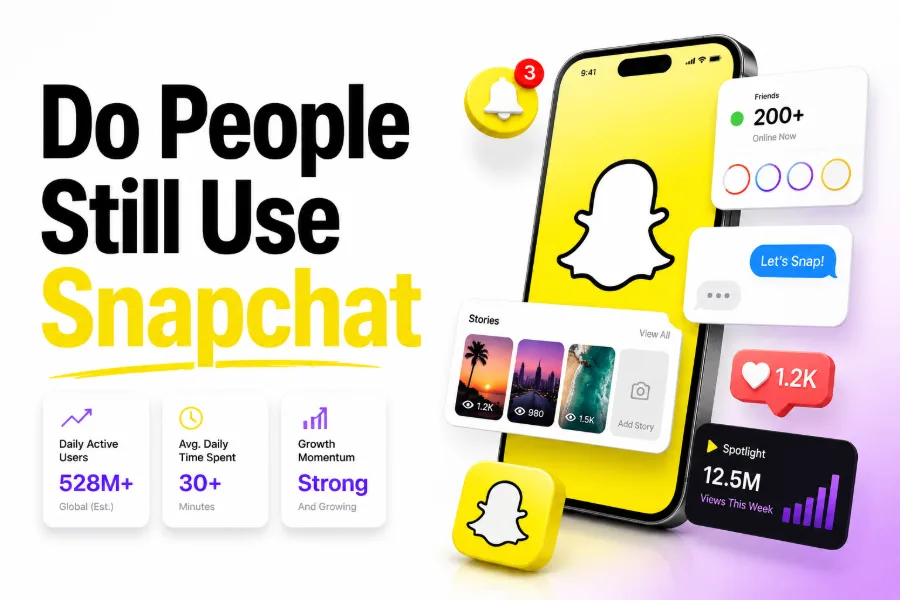
Social media changes fast, so it is natural to wonder whether older platforms still matter. The phrase do people still use snapchat comes up often because many users now divide their time across TikTok, Instagram, YouTube, and messaging apps instead of relying on one platform alone.
Snapchat no longer dominates online conversation in the same way it did during its fastest growth years. Even so, that does not mean it disappeared. It still plays a clear role for millions of people who prefer fast sharing, direct communication, and a less polished social experience.
The better question is not whether Snapchat is alive or dead. The better question is what kind of platform it has become. Once you look at how people actually use it today, the answer becomes much clearer and much more useful for readers, creators, and brands.
Snapchat Still Has a Large and Active Audience
When people stop hearing about a platform every day, they often assume the audience vanished. That assumption does not match reality. Snapchat still attracts a very large user base, and that alone tells us the platform remains part of the social media mix.
What has changed is visibility, not existence. Snapchat is less likely to dominate public debates, celebrity moments, or trend reports than TikTok or Instagram. Still, a platform can be deeply used without always being the loudest place on the internet.
That difference matters because Snapchat is built more around everyday communication than public performance. Many users open it to message friends, send quick updates, keep streaks going, and stay connected in a casual way that feels less formal than other networks.
Current Usage Signals Show Staying Power
A platform does not need to be everyone’s favorite app to remain important. It only needs to solve a specific problem better than alternatives. Snapchat still does that for users who value speed, privacy, and communication that feels more immediate than a public post.
Its design encourages repeat behavior. People do not need a big reason to open Snapchat. They check a message, reply to a friend, send a photo, or react to a story. Small actions like these create the kind of habit that keeps a platform relevant over time.
This is why usage should be viewed through behavior, not noise. A quieter app can still be a daily habit. Snapchat fits into routines in a way that may not always create headlines, but it continues to hold attention in ordinary social life.
Quick Snapshot
- Snapchat still matters because daily habit is different from public hype.
- It stays relevant by serving direct communication, not only entertainment.
- The platform’s strength comes from repeat personal use, not constant virality.
Younger Users Keep Snapchat Socially Relevant
One reason Snapchat remains important is its continued connection with younger audiences. Not every young user treats it as a main discovery platform, but many still keep it in rotation because it supports the kind of communication that feels personal and low pressure.
That matters more than many marketers realize. A platform can lose broad cultural dominance and still hold strong value if it stays embedded in how younger people interact with friends. Snapchat often works as a relationship tool rather than a pure content consumption tool.
This also explains why the app feels different across age groups. Older users may open it occasionally, while younger users often understand its rhythms better. Features like streaks, private stories, Bitmoji identity, and direct snaps still make sense within that younger social culture.
Messaging Habits Make Snapchat Different
Snapchat’s relevance is tied closely to messaging. On some platforms, conversation happens below a post in public comments. On Snapchat, interaction is usually more direct, more private, and more centered around people the user already knows in real life or trusts online.
That creates a different kind of loyalty. Users may spend more time discovering content elsewhere, but still return to Snapchat when they want to talk, react, joke around, or share something quick without turning it into a permanent public update.
This private-first behavior helps explain why Snapchat can feel less visible from the outside. It is not designed mainly to produce widely shared moments. Much of its value happens in conversations, small circles, and short exchanges that are meaningful to users but invisible to observers.
Why This Matters
- Younger audiences do not use every platform for the same reason.
- Snapchat often works as a friendship tool more than a discovery engine.
- Private communication can keep an app relevant even without loud trends.
Private Sharing Shapes the Whole Experience
Snapchat feels different because the platform was built around temporary, lightweight sharing. That changes how people behave. They often post without overthinking captions, edits, or how the content will look months later on a public profile viewed by strangers.
That freedom still appeals to users who feel tired of polished feeds. On Instagram, every post can feel like a presentation. On TikTok, every video can feel like a performance. Snapchat gives people room to share moments that are fast, casual, and less curated.
This does not mean Snapchat is free from pressure or comparison. Every social platform carries some level of both. Still, its structure lowers the need to turn every update into a public statement, and that is one reason many users keep it even while using other apps more visibly.
The Platform Feels Less Like a Public Stage
Many people leave social platforms when they start feeling watched all the time. Snapchat reduces that feeling for some users. Instead of speaking to everyone at once, they can send something to one friend, a small group, or a limited story audience.
That smaller-scale environment supports more natural interaction. A quick face photo, a short video reaction, or a messy everyday update works fine there. The content does not need to be polished because the expectation is different from what users bring to highly public networks.
For this reason, Snapchat still serves people who want digital closeness without full-scale broadcasting. It is less about building a public identity and more about maintaining everyday contact. That makes it particularly useful for friendships, dating, inside jokes, and routine social presence.
Reader Takeaways
- Snapchat works well for low-pressure sharing.
- It feels more personal because much of the activity stays in smaller circles.
- Users who dislike polished public feeds often keep Snapchat for casual updates.
Snapchat Still Has Value for Brands and Creators
For businesses, the answer to do people still use snapchat should not be based only on popularity charts. It should be based on audience fit. If a brand wants polished evergreen content, other platforms may work better. If it wants fast, native communication, Snapchat can still help.
This is especially true for brands that speak to younger audiences in lifestyle, fashion, beauty, entertainment, events, food, or local culture. Snapchat can be useful when the message feels immediate, human, and visual rather than formal, corporate, or built around long explanations.
Creators can also benefit, although the opportunity looks different from TikTok or YouTube. Snapchat is often stronger for maintaining familiarity than creating mass discovery. It can deepen connection with an audience that already knows the creator and wants more casual behind-the-scenes content.
Short Native Content Performs Better Here
Content on Snapchat usually works best when it matches the way the platform is naturally used. Overproduced material often feels out of place. Users respond better to content that feels quick, direct, vertical, and close to the tone of everyday communication.
That means brands should not simply copy content from other platforms and repost it unchanged. A short real-time update, product tease, event clip, or honest face-to-camera moment often fits Snapchat better than a polished campaign asset designed for public feed performance elsewhere.
If your site covers related social media behavior, this is a good place to connect readers with helpful internal resources such as can you use snapchat on a computer or broader platform comparisons like is tiktok safe to use. These supporting links help readers continue the journey while strengthening topical relevance.
Where Brands Still Win
- Real-time promotions and event reminders
- Youth-focused lifestyle campaigns
- Casual behind-the-scenes storytelling
- Fast visual updates that feel native, not overproduced
Some Users Leave Because the Platform Has Narrowed
Snapchat still matters, but it is also fair to explain why some people stop using it. One reason is platform overlap. Users now have many options for messaging, stories, short video, and group interaction, so Snapchat is no longer the default choice for everything.
Another reason is age and life stage. As users get older, their habits change. Some move toward WhatsApp for messaging, Instagram for identity and networking, or TikTok for entertainment. Snapchat can start to feel less central if their social circles shift elsewhere.
The learning curve also plays a role. For someone returning after years away, Snapchat can feel unfamiliar, feature-heavy, or more youth-coded than other apps. That does not mean the platform is failing. It means its strongest appeal is now more specific than universal.
Competition Changed Expectations Across Social Media
The rise of TikTok changed what many users expect from an app. Discovery became faster, entertainment became more algorithmic, and creators could reach large audiences without an existing network. Snapchat was not built around that same public recommendation-first experience.
Instagram also expanded aggressively with stories, reels, messaging, and creator tools. That overlap made it easier for users to ask whether they really needed Snapchat as well. In many cases, people kept it only if it served a distinct purpose in their personal communication habits.
This is the key shift. Snapchat no longer wins by trying to be everything. It stays useful when it does one job clearly: helping people stay in touch in a fast, visual, friend-centered way. For users who want that, the platform still fits naturally.
Common Reasons Usage Drops
- Friends become more active on other apps.
- Users want broader discovery and public reach.
- Newer platforms absorb similar features.
- Older users may prefer simpler messaging environments.
Snapchat Still Fits Specific Goals in 2026
The strongest answer to this topic is practical rather than dramatic. Snapchat is still worth using when your goal matches what the platform does well. It works for quick friend communication, casual sharing, local promotions, youth-facing brand moments, and low-pressure visual updates.
It is less useful when your main goal is long-form education, search traffic, public thought leadership, or broad influencer discovery. Those jobs usually belong to different platforms. The smartest users and marketers do better when they stop expecting one app to do everything at once.
That is why the most honest answer is balanced. Snapchat is not universally essential, and it is not irrelevant either. Its value depends on audience, intention, content style, and the kind of interaction someone wants to create or maintain on a daily basis.
The Best Use Cases Are Clear and Practical
For personal users, Snapchat is still a strong choice when the goal is staying close to friends in a lightweight way. It feels immediate, expressive, and personal. A person may not post there for the whole world, but still use it constantly with trusted contacts.
For businesses, the platform makes the most sense when brand personality matters and the audience is active there already. Local brands, event-based campaigns, youth products, and quick visual storytelling often match Snapchat better than brands that need heavy explanation or high search visibility.
For content strategy, Snapchat works best as part of a mix. It can support connection while other platforms handle discovery, education, or evergreen traffic. Used this way, Snapchat becomes more effective because it is no longer forced into a role it was never built to fill.
Best-Fit Use Cases
- Everyday communication with close friends
- Casual behind-the-scenes creator content
- Youth-focused product awareness
- Event updates, launches, and timely promotions
- A supporting channel inside a broader social strategy
Conclusion
Snapchat is no longer the only app shaping youth culture, and it is not the loudest platform in the room. Even so, it continues to serve a clear purpose that many users still value. Its strength comes from closeness, speed, and more private social interaction.
So, do people still use snapchat today? Yes, but the reasons are more specific than they used to be. People keep it because it helps them talk to friends, share everyday moments, and stay present in smaller social circles without turning everything into a performance.
That makes Snapchat less universal than before, but still relevant in a meaningful way. If someone expects it to behave like TikTok, they may miss the point. If they understand its role as a direct, visual, relationship-driven platform, its staying power becomes easy to see.
FAQ
Is Snapchat still popular with young people?
Snapchat still holds strong relevance among younger users because it supports direct messaging, private stories, streaks, and fast visual sharing. It may not lead every trend conversation, but it remains part of how many younger users stay in touch every day.
Is Snapchat better for messaging than public posting?
For many users, yes. Snapchat feels more natural for quick conversations, reactions, and everyday updates than for polished public posting. Its structure encourages lighter interaction, which is why many people keep it even when they post more publicly elsewhere.
Do brands still advertise on Snapchat?
Brands still use Snapchat when they want to reach younger audiences with fast, native visual content. It usually works best for lifestyle, fashion, food, events, entertainment, and local promotions rather than slow, text-heavy, or highly formal campaigns.
Why do some people stop using Snapchat?
Some users leave because their friends move to other apps, their content habits change, or they want stronger discovery features. Others simply outgrow the platform’s style. In many cases, people do not fully quit; they just use it more selectively.
Is Snapchat worth using for creators in 2026?
Snapchat can still be useful for creators who want closer audience connection, behind-the-scenes sharing, and casual daily touchpoints. It is usually better for maintaining familiarity than for massive public discovery, so it works best as one part of a wider content strategy.